


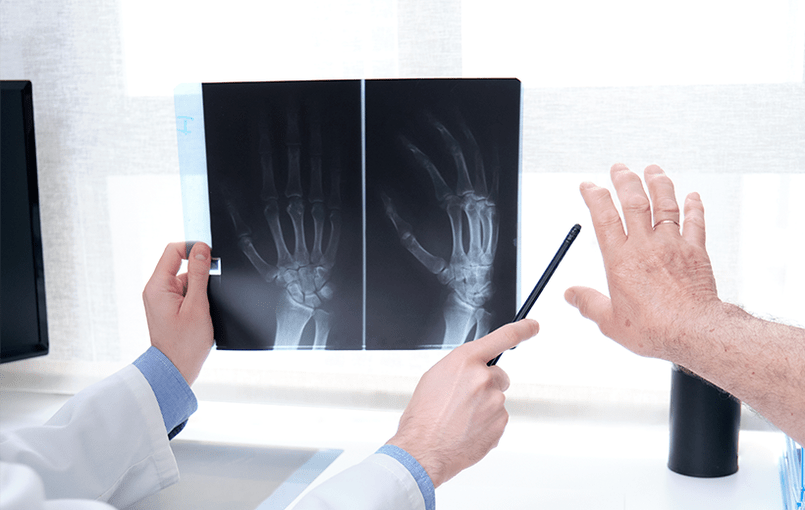
Osteoarthritis is a chronic disease of the joints associated with degenerative-dystrophic changes in their structures with predominant damage to the cartilaginous tissue.The disease progresses slowly and is asymptomatic in the early stages.The cartilage and bone tissue of the joint, its capsule and the periarticular bag are gradually destroyed, and subsequently the surrounding muscles, ligaments and subcutaneous tissue are involved in the pathological process.
According to the WHO, one in ten people suffers from this disease and the risk of developing it increases significantly in people over the age of 50.The knee and hip joints are most often affected.The cause of arthrosis is the inability of the joint to cope with the load on it.In response to traumatic effects, inflammation develops, leading to pathological processes in the tissues of the joint.
Patients with joint arthrosis require complex treatment, without which the disease leads to a decrease in working capacity and quality of life, limitation of sporting and professional activities and, ultimately, disability.
Classification of osteoarthritis
Based on the cause of onset, the disease is divided into:
- primary arthrosis - occurs due to the fact that the cells of the cartilaginous tissue of the joint are destroyed faster than new ones are formed.Most often this is associated with age-related changes and is not a consequence of any specific pathological process in the body;
- secondary arthrosis - appears against the background of a specific disease or as a result of joint injury.
Based on the location, arthrosis is divided into localized (affecting less than 3 joints) and generalized (affecting more than 3 joints).The latter is also called polyarthrosis.
Causes of osteoarthritis
This disease ranks first in the world among the causes of pain and impaired activity.Despite the fact that age-related changes are considered the main cause, it is often diagnosed in young patients.Women are more predisposed to osteoarthritis than men, although closer to 70 this difference becomes almost imperceptible.
Osteoarthritis of the hip, knee, ankle and shoulder joints has the greatest negative impact on the quality of life and work capacity of patients.Less common are arthrosis of the elbow and temporomandibular joints, as well as of the hands, feet and spine.
Predisposing factors include:
- old age;
- genetic predisposition;
- intense physical activity associated with sporting or professional activities or, on the contrary, a sedentary lifestyle, which interrupts the normal nutrition of the tissues, especially in large joints;
- joint injuries (fractures, cracks, dislocations);
- wearing inappropriate shoes;
- systemic diseases (metabolic disorders, endocrine diseases, neuropathies, gastrointestinal diseases, bleeding disorders);
- poor nutrition;
- overweight.
Women are more likely to suffer from this disease because they are more susceptible to hormonal imbalances.
Symptoms and degrees of osteoarthritis
The main clinical sign of osteoarthritis is pain.In the initial stages it may be absent, mild or intermittent.As the disease progresses, the pain becomes more evident, it can occur during physical activity, and in the advanced stages it can be annoying even at rest.
Secondary manifestations of the disease depend on the localization of the process.In most cases, these are limited mobility in the affected area (especially after sleep or a long rest), deformation, swelling and redness in the joint area, creaks and crackles during movement, sleep disturbances due to pain and inability to find a comfortable position of the body, changes in gait and coordination, muscle spasms.
It is worth noting that the pathological process in one joint can move to neighboring ones due to incorrect load distribution or limitations in movement.
Based on the severity of the lesion, the following are distinguished:
- 1st degree arthrosis - is asymptomatic or the signs are not expressed, the patient remains able to work and the diagnosis is difficult;
- 2nd degree arthrosis – accompanied by severe symptoms, the patient's quality of life decreases, diagnostics reveal obvious disorders;
- arthrosis of the 3rd degree - characterized by an increase in clinical signs, joint deformation is noted externally, and diagnostic methods reveal serious intra-articular disorders;
- 4th degree arthrosis - leads to partial or complete disability;disorders are found in all structures of the joint, surrounding muscles and ligaments.
Diagnosis of osteoarthritis
An orthopedic traumatologist makes a primary diagnosis based on the patient's data on his lifestyle and work activities, the nature and duration of complaints, the dynamics of symptoms, the presence of arthrosis in relatives, and also conducts an examination and prescribes tests or consultations with related specialists (endocrinologist, hematologist, nutritionist, gastroenterologist).
Laboratory tests include a general blood test with white blood cell count, hemoglobin level, and ESR.These indicators indicate inflammation in the body, which is necessarily present in osteoarthritis.Biochemical parameters measure the level of rheumatoid factor and C-reactive protein.If certain conditions are suspected, other laboratory blood parameters are checked.Also of diagnostic value is the analysis of synovial fluid, which reveals pathological cells and inclusions, allows you to confirm the diagnosis or differentiate another disease.
Instrumental and visual methods of diagnosing arthrosis help not only to detect the pathology, but also to determine the stage of the disease and the degree of involvement of surrounding tissues.The most effective are:
- radiography - performed mainly in two projections, is used to detect narrowing of the joint space and the formation of bone growths (osteophytes) at the site of damaged cartilage;
- magnetic resonance imaging and computed tomography - prescribed in the early stages, when small changes are not yet noticeable on X-rays;
- Ultrasound - used in addition to these methods and helps to identify the accumulation of excess fluid in the joint cavity (for example, a Baker's cyst in gonarthrosis), evaluate the condition of the surrounding tissues and measure the thickness of the articular cartilage;
- scintography – involves intravenous administration of a radioactive drug that accumulates in tissues with inflammatory processes, and such areas of accumulation are visualized on images, thanks to this it is possible to identify arthrosis in the initial stages and carry out differential diagnosis;
- arthroscopy - allows you to examine the joint from the inside by introducing a microcamera into the joint cavity through a small incision, as a result it is possible to collect detailed data on the pathological processes and ongoing lesions, as well as perform a biopsy from the affected area;
- histological examination of the synovial membrane - reveals an altered ratio of healthy cells and the presence of pathological inclusions in the joint, allowing differential diagnosis.
Differential diagnosis allows you to distinguish arthritis from other diseases with a similar clinical picture, which include:
- various arthritis (ankylosing, reactive, rheumatoid, psoriatic, infectious);
- gout and pseudogout;
- diseases of the muscles and ligaments (fibromyalgia, polymyalgia rheumatica);
- arthropathy (diabetic, paraneoplastic);
- congenital diseases (hypoplasia of the femoral head).
Treatment of osteoarthritis
Despite the wide spread of the disease and well-studied methods, there is no treatment for osteoarthritis.Therapeutic approaches aim to eliminate pain, relieve inflammation, restore joint function and prevent complications.
The choice of therapy depends on the cause, location and degree of arthrosis:
- drug therapy in the form of taking tablets for arthrosis (painkillers and nonsteroidal anti-inflammatory drugs, corticosteroids, chondroprotectors), intra-articular or periarticular injections of these groups of drugs, additionally using ointments and gels;
- physiotherapy during remission (medicinal electrophoresis, galvanization, acupuncture, electrical stimulation, shock wave therapy, massage, magnetic and laser therapy, cryotherapy);
- therapeutic exercises for arthrosis are prescribed individually, sessions are carried out under the supervision of a specialist;
- in advanced cases, surgical intervention is performed (partial or complete replacement of the joint, suturing or removal of a torn meniscus, removal of bone growths and Baker's cysts).
Prevention of osteoarthritis
It is recommended to control the load on the joints, maintain a healthy lifestyle, engage in therapeutic exercises, monitor weight and adhere to proper nutrition.
An orthopedic traumatologist will help select knee braces, an orthosis or a bandage for patients with arthrosis to repair the affected joint, reduce the load on it and prevent injury.
Preventive examinations and timely consultation with a doctor in case of discomfort in the joints allow you to identify the problem at an early stage and avoid serious complications and disabilities.